
Bali Nights Are Hot — Here's Why Muslin Wins (Not "Cotton")
Bali's tropical nights are hot and humid — discover why breathable muslin (not standard cotton) keeps your little one cool, dry, and sleeping soundly
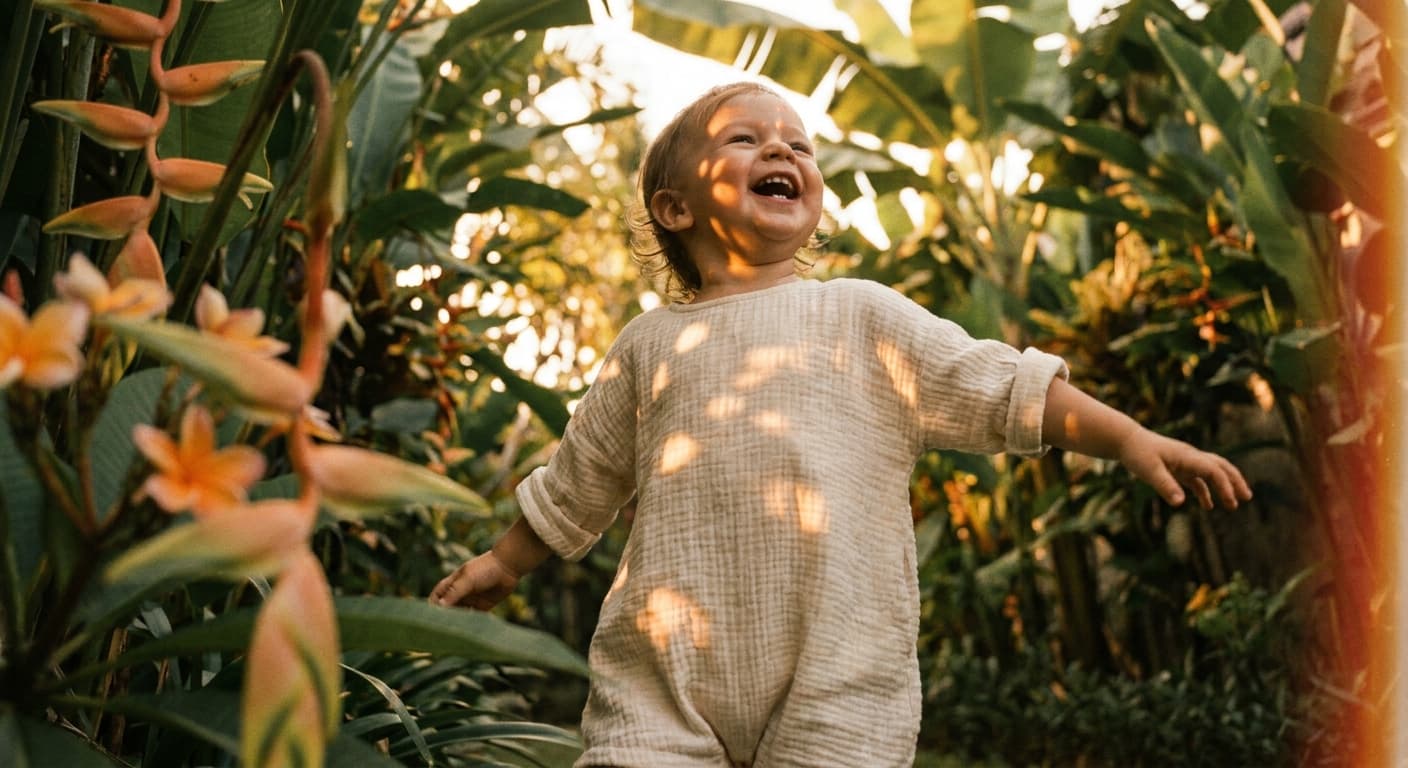
What Should Bali Newborns Actually Wear in the Heat?
Yes — Bali newborns should wear lightweight, multi-layer muslin cotton, not standard cotton, because muslin is genuinely cooler in tropical heat. Muslin is cotton woven loose and open instead of tight, so air moves through the fabric instead of trapping heat against a newborn's skin. That's the difference between a peaceful nap and an overheated, cranky one.
The Bali Story: Why We Started Epic
We didn't set out to start a clothing brand. We just had a daughter who wouldn't stop sweating through her onesies.
Bali heat isn't like anywhere else we'd lived. Coastal humidity here holds at roughly 75–85% year-round, with nighttime temperatures rarely dropping below 24°C (BMKG, Indonesia's meteorological agency). It's the kind of heat that sits on you, thick and constant, from sunrise straight through the evening breeze that never quite cools things down. Our daughter was born into it, and within her first few weeks we noticed the "soft, breathable" baby clothes we'd bought before the move weren't actually soft or breathable once we put them through an actual tropical day. She'd wake up damp. She'd fuss the second we buttoned her into anything with real thickness to it. We started stripping her down to a diaper just to get her to settle.
We went looking for something better and kept running into the same word: muslin. Not as a marketing term, but as something parents in hot climates had relied on for generations: swaddles, wraps, everyday layers. So we tried it on her. And she slept.
That's Epic, in one sentence: clothes we wished existed when our own daughter was overheating in everything else.
Muslin vs. "Cotton": What's Actually Different
The Weave Is the Whole Story
Here's the thing nobody tells you at the baby store: "cotton" isn't one fabric. It's a fiber that gets woven a hundred different ways, and the weave, not the label, decides how it feels against skin in the heat.
Muslin is cotton woven loose and open, almost gauze-like, in multiple thin layers rather than one dense one. That open structure does two things: it lets air pass straight through instead of pooling as trapped humidity, and it keeps the fabric lightweight enough that it barely registers on the body. Regular cotton, the kind in most standard baby basics, is woven tight and flat, which makes it durable and structured, but also means it holds heat and moisture close to the skin instead of releasing it.
In a temperate climate, you'd probably never notice the difference. In Bali, at midday, with a baby who can't tell you she's overheated, you notice immediately.
Why Tighter-Woven Cotton Struggles in Bali Heat
We're not going to tell you regular cotton is "bad." It's a fine fabric for a lot of climates and a lot of garments. But it wasn't built with equatorial humidity in mind. Tighter weaves trap warm air against the skin, and for a newborn who can't regulate her own temperature yet, that trapped heat shows up fast. Newborn sweat glands aren't fully functional until roughly two to four weeks after birth (pediatric dermatology research), so babies depend on breathable fabric to do the cooling work their own bodies can't yet manage: flushed cheeks, damp hair at the back of the neck, restless squirming instead of sleep. We lived that exact cycle for weeks before we made the switch, and the change in her wasn't subtle. It was the same night.
What to Look For When You're Shopping
If you're standing in a store (or scrolling online) trying to figure out whether something will actually hold up in the heat, here's what we check every time:
- Hold it up to the light. If you can't see the weave gaps, it's too dense to breathe well.
- Feel the weight in your hand. Genuine muslin feels almost weightless. If it has real heft, it'll trap heat.
- Check the layering, not just the fabric name. Multi-layer muslin (2–4 layers) gives you softness without sacrificing breathability. Single-layer gauze can feel flimsy.
- Press it against your own inner wrist. If it feels warm or clingy there, it'll feel that way on a baby too, and babies can't tell you.
- Look for pre-washed or pre-softened fabric. Muslin gets softer with every wash, so a good piece should already feel gentle on day one, not scratchy and "breaking in."
Designed for Exploration: Clothes That Let Kids (and Parents) Move
Once she stopped overheating, something else changed: she started moving more. Crawling further, reaching higher, actually wanting to be outside instead of wilting in it. Lightweight, loose-woven fabric doesn't just feel better, it gets out of the way. No stiff seams pulling at her shoulders, no heavy fabric weighing down a kick or a stretch. That's freedom of movement, literally, and it's a relief for us too. A kid who's comfortable plays longer, naps easier, and fusses less, which means we get to actually enjoy the day instead of managing a meltdown.
FAQs
How do we care for muslin so it stays soft?
To keep muslin soft, wash it in cool or lukewarm water and skip the fabric softener. Muslin gets softer with every wash on its own, and softener coats the fibers and dulls that effect over time. Tumble dry low or line dry — either way, it keeps getting better with age, not worse.
What size should we pack for a Bali trip?
Pack one size up from what your baby's currently wearing if you'll be in Bali more than a couple weeks. Heat tends to make babies want looser, roomier fits, and muslin's softness means a slightly bigger size never feels stiff or ill-fitting the way structured fabrics do.
Is muslin actually gentle enough for sensitive newborn skin?
Muslin is gentle enough for sensitive newborn skin — it's what finally worked for our own daughter, and it's the reason we built Epic around it. The soft, breathable weave means less friction and less trapped heat against skin, two of the biggest triggers for newborn irritation in a climate like this.
A Note from Bali
We built Epic sitting exactly where you might be sitting now: hot, a little sleep-deprived, and tired of clothes that looked cute in photos but made our daughter miserable in real life. Everything we make gets tested the same way hers did: on an actual kid, in actual Bali heat. If you're a family like ours, figuring out what actually works in this climate, we hope our pieces make your days a little cooler and a little easier. Come take a look. We made them for you.
From one parent to another
Dressing a little one for the heat?
Join the EPIC family for honest guides on dressing kids in the tropics, first look at new pieces, and 10% off your first order.
No spam, just the good stuff. Unsubscribe anytime.
More from Knowmads Bali
Born in Bali · Tested in the tropics
Muslin cotton, made for the heat
Breathable, soft, and built for real tropical days. Our onesies & playsuits are where most families start.