
Muslin Amenity Kits for Bali Villas: How Much Fabric?
Bali villa mornings are humid and chaotic — here's exactly how much muslin fabric your amenity kits need to actually hold up.
How Much Muslin Fabric Do I Actually Need for Baby Amenity Kits?
A basic baby amenity kit (one swaddle wrap, one burp cloth, one washcloth) needs about 1.5 yards of muslin, plus 10–15% extra for hemming and shrinkage. A ten-room villa stocking two kits per suite needs roughly 30–45 yards total. Epic doesn't sell fabric wholesale by the bolt, but here's the yardage math and sourcing checklist we use.
The Bali Story
We started Epic because our daughter was born into Bali heat — coastal lowlands here average 27–28°C with 75–85% humidity year-round (BMKG, Indonesia's Meteorology, Climatology and Geophysics Agency) — and refused to wear anything that didn't move the way she did. We tried the usual baby basics: the ones that looked soft in photos and turned stiff and clingy the second she started sweating through an afternoon at the beach or a nap without air conditioning. The fabric mattered more than the design. Families like ours, raising kids in the tropics, don't need "cute." We need something that breathes.
The Real Math Behind the Yardage
Amenity kits sound simple until you're standing in front of a cutting table. A single swaddle wrap for infant sizing eats about 1 yard on its own if you want enough drape for a proper swaddle, not a stiff little square that unravels by 3am. Add a washcloth (a quarter yard) and a burp cloth (another quarter yard), and you're at 1.5 yards minimum per kit. That's before you account for directional cutting, pattern matching, or a villa that wants monogramming or trim.
What Changes the Number
The biggest swing factor is layering. Single-ply muslin is thinner and uses less yardage, but it wears thin fast and won't hold up to the wash-and-rewash cycle a villa laundry service puts it through. Double-gauze is two layers of plain-weave muslin woven together in a single pass, not stitched or bonded after the fact. It uses more fabric per piece but survives real use, which is why we lean on it for anything that touches a baby's skin directly. If you're kitting out a full villa, budget on the higher end rather than the lower one. Running short mid-season and re-cutting scraps is a bigger headache than buying a few extra yards up front.
What to Look for When Sourcing Muslin for Kits
Muslin is a lightweight, plain-weave cotton fabric, typically woven at a low thread count around 128 threads per square inch (Cotton Incorporated), loose enough to let air pass straight through instead of trapping it against skin. We learned most of this the hard way, testing fabric against our own daughter's skin before we ever put it in a product. If you're sourcing for babies, whether it's one swaddle or forty kits, here's what actually matters:
- Softness that doesn't come from a finish. Rub it between your fingers. Fabric that feels soft because of a chemical treatment usually stiffens up after the first wash. Fabric that's genuinely soft gets softer.
- Breathability you can see through. Hold it up to light. If it's opaque and heavy, it's going to trap heat, the opposite of what you want in Bali humidity.
- Lightweight enough to move. A baby (or a parent doing three loads of laundry a day) shouldn't have to fight the fabric.
- A weave that won't fray at the edges. Cheap muslin unravels fast under repeated washing. Check a swatch after a few wash cycles before committing to yardage.
- Gentle against sensitive skin. No rough seams, no scratchy trim, nothing that would irritate skin that's already dealing with heat rash season.
Designed for Exploration
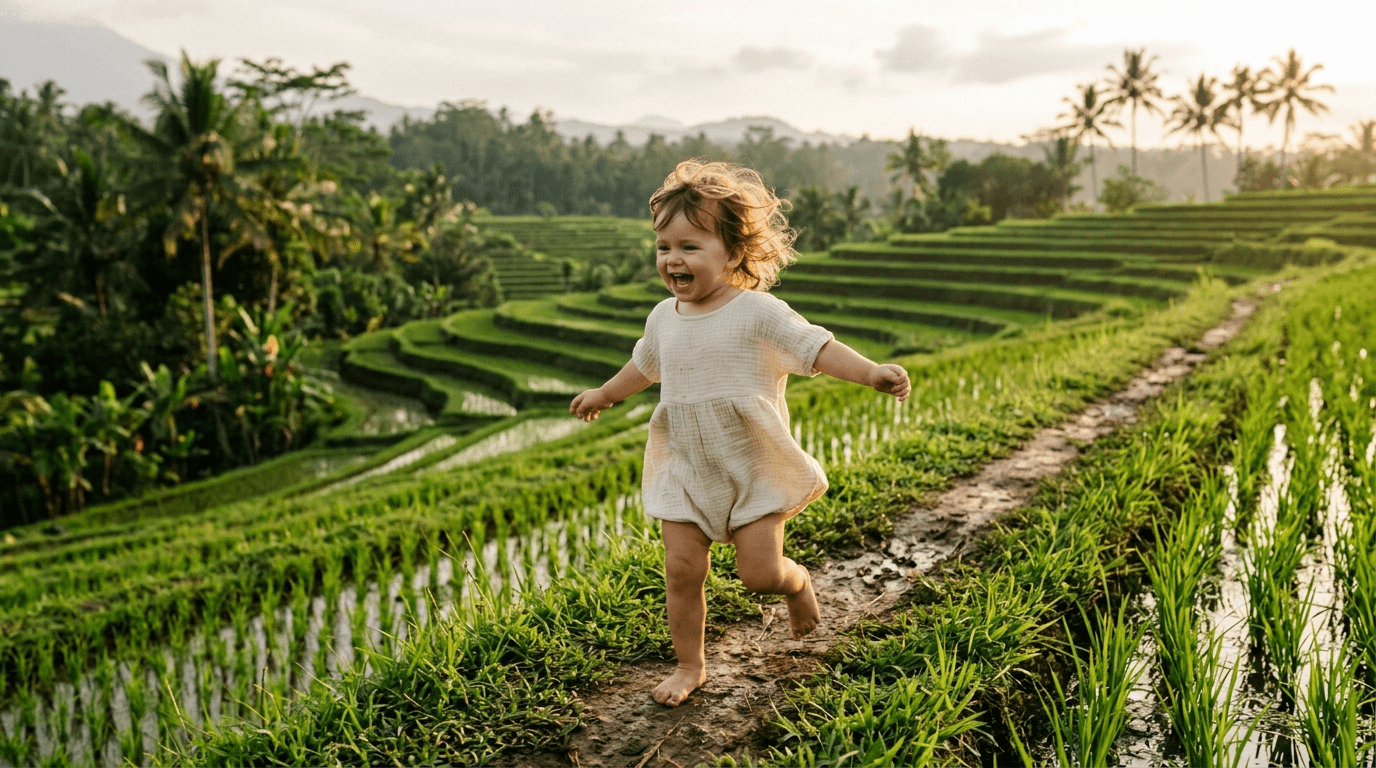
The reason we obsess over fabric this much is simple: kids don't stay still, and neither do we. Our daughter has spent her whole life climbing, crawling, and sweating her way through Bali: rice paddies, beach days, jungle walks. Clothing that restricts movement means a cranky kid and a parent renegotiating a meltdown instead of enjoying the afternoon. The right muslin lets both of you actually be there. Less tugging at collars, less overheating, less stopping to change a shirt that's stuck to sweaty skin. That's not a small thing. That's the whole point.
FAQs
How do I care for muslin so it stays soft?
Wash cold, skip the fabric softener (it coats the fibers and defeats the breathability you're paying for), and let it air dry when you can. Muslin improves with washing. It gets softer over time, which is the opposite of most baby fabrics.
What size should I pack for a Bali trip?
Pack one size up from what your baby's currently wearing if you're traveling during a growth spurt, and prioritize pieces with room to move over anything fitted. Loose, breathable layers handle heat and airport AC swings better than snug basics.
Is muslin actually gentle on sensitive skin?
Muslin is generally gentle on sensitive skin because its light, breathable weave traps less heat and sweat against the body, which is often what triggers irritation in tropical climates in the first place. We watched it make a real difference for our own daughter during her worst heat-rash months.
A Note from Bali
We're not a wholesale fabric house, and we're never going to pretend otherwise. What we are is two parents who kept testing muslin until we found pieces soft enough for our daughter's skin and tough enough for her actual life. If that's what you're looking for, for your own kid and not a supply closet, take a look at what we've made. We think you'll feel the difference the first time you hold it.
More from Knowmads Bali
Born in Bali · Tested in the tropics
Muslin cotton, made for the heat
Breathable, soft, and built for real tropical days. Our onesies & playsuits are where most families start.