
How to Tell If That "100% Cotton" Muslin Swaddle Is Actually Good
"How to spot a fake "100% cotton" muslin swaddle before it pills, overheats, or falls apart on your next trip."
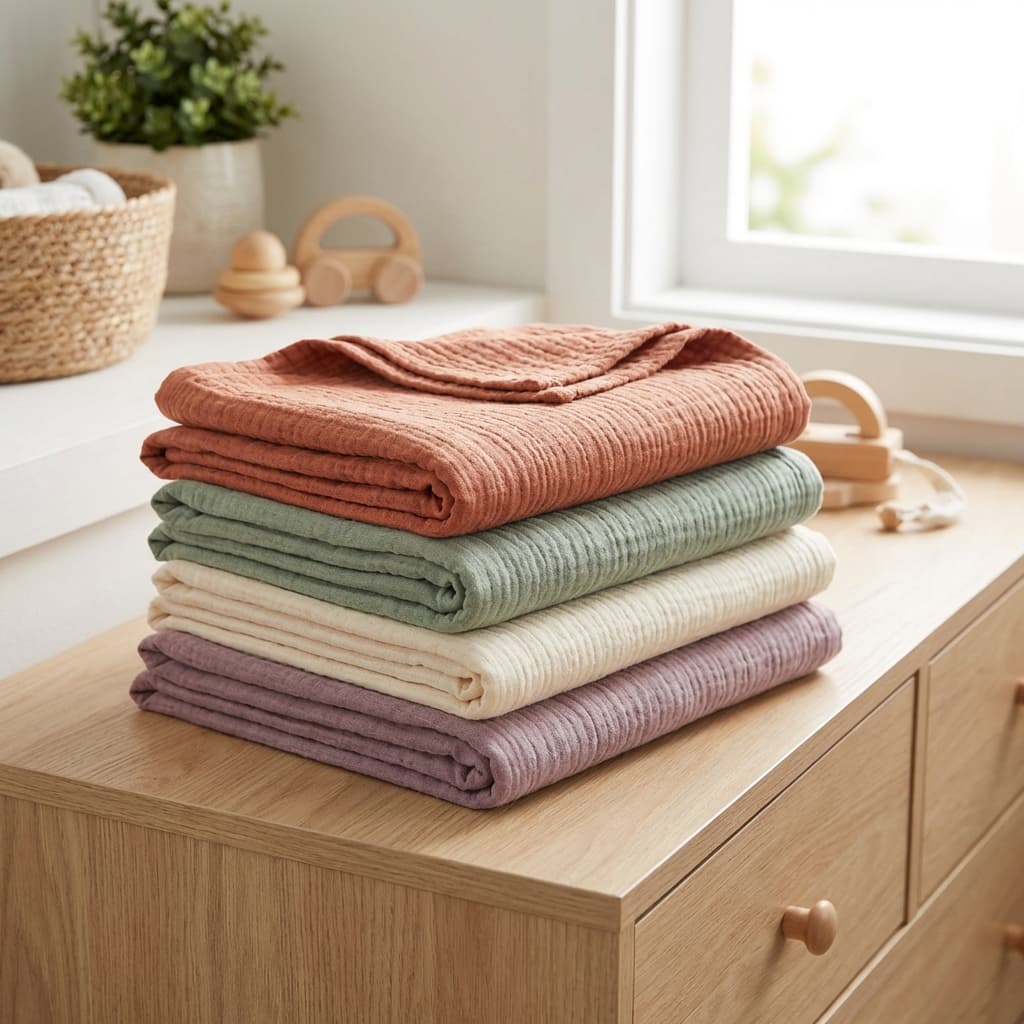
How Do You Know If a "100% Cotton" Muslin Swaddle Is Actually Good?
You can't tell whether a muslin swaddle is actually good quality from the "100% cotton" label alone — that phrase only describes the fiber, not the weave, weight, or finish that determine softness and breathability. Check three things instead: how the fabric feels in your hand (soft immediately, not stiff or papery), how it moves (light and drapey, not heavy or boardy), and how easily it breathes when scrunched against your skin.
Why We Started Asking This Question
We didn't set out to become swaddle people. We just had a daughter, and we had Bali. Heat that doesn't let up, humidity that sits on your skin from sunrise (Bali's coastal humidity runs 75–85% year-round, per Indonesia's BMKG weather agency), and a baby who wanted to be out in it, not wrapped up and sweating in the corner of a room with the AC cranked. We bought what the registries told us to buy, swaddles that said "100% cotton" right there on the tag. Some of them were genuinely lovely. Others felt like wrapping our daughter in a dish towel, scratchy at the seams, stiff even after a dozen washes, barely moving air at all. She'd wake up flushed and irritable, and we'd be standing over the crib at 2am wondering what we'd done wrong.
Turns out we hadn't done anything wrong. We'd just trusted a label that wasn't built to tell us what we actually needed to know. That's the whole reason Epic exists. We wanted the swaddle we wished someone had handed us in that first exhausted month.
What "100% Cotton" Actually Leaves Out
Muslin is a loosely woven, plain-weave cotton fabric, traditionally woven at a lower thread density than standard cotton so air can pass through the gaps in the weave. That openness — roughly 90–140 threads per square inch, about half the density of standard quilting cotton (Cotton Incorporated) — is what makes a swaddle breathable, not the fact that it's cotton. Cotton is a fiber, not a finish: two swaddles can both say "100% cotton" and feel like completely different fabrics in your hands, one soft and airy, the other dense and rough. The label describes what the thread is made of, not how it was woven, how tightly, or how it was treated afterward. That gap is where a lot of "quality" swaddles quietly fall short.
What to Actually Check Before You Buy (or Before You Trust One You Own)
We noticed a pattern once we started paying attention. The swaddles that held up and stayed soft shared a few things in common, and the ones that didn't were missing all of them.
- The hand-feel test: Rub the fabric between your fingers. It should feel soft immediately, not "soft after enough washing." If it feels papery or stiff out of the package, it's not going to transform in your dryer.
- The light test: Hold it up to a window. You should be able to see a gauzy, open weave. That's what lets air move through and keeps a baby from overheating. A dense, opaque weave traps heat.
- The drape test: Let it hang. A good muslin swaddle should fall in soft folds, not stand stiff or crease sharply. Stiffness usually means a heavier, less breathable weave underneath that "100% cotton" claim.
- The wash test: Good muslin gets softer with every wash, not thinner or more see-through. If it's pilling or thinning fast, the weave wasn't built to last.
- The seam check: Run a finger along the hem and any embroidery. Scratchy or stiff seams are where sensitive newborn skin gets irritated first, even if the rest of the fabric feels fine.
None of this shows up on a hangtag. It's why we tell people: don't just read the label, touch the fabric. Your hands know before the packaging tells you anything.
Designed for Exploration, Not Just Sleep
We didn't want a swaddle, or really any of our daughter's clothes, that only worked in a crib. Bali life doesn't pause for naps. There's the beach, the rice fields, grandma's lap, the car seat, the stroller under a tree. A swaddle that's genuinely lightweight and breathable does double duty: it keeps a baby cool and calm when it's wrapped snug for sleep, and it turns into a light layer, a nursing cover, or shade over the stroller the rest of the day. Families like ours don't want gear that demands a climate-controlled room to function. We want fabric that keeps up with an actual, moving, curious day, and lets our kids (and us) worry less about overheating and more about just being out in the world.
FAQs
How do I care for a muslin swaddle so it stays soft? Wash in cool or warm water, skip the fabric softener (it coats the fibers and actually reduces breathability over time), and tumble dry low or line dry. Good muslin should get noticeably softer after every wash. If it's not, the weave wasn't made to soften in the first place.
What size swaddle should I pack for travel? Look for one generous enough to wrap snugly around a newborn with room to spare as they grow into the stretchy-legs stage. Bigger than you think you need. A swaddle that's too small stops working within weeks and won't double as a stroller cover or nursing layer on the road.
Is muslin actually gentle enough for sensitive skin? Muslin's fiber alone doesn't guarantee gentleness on sensitive skin — the weave and finish do the real work. A genuinely soft, breathable muslin won't trap heat or moisture against delicate skin, which is usually what triggers irritation in the first place. If your baby runs warm or has sensitive skin, breathability matters as much as softness.
A Note from Bali
We still keep one of our daughter's first swaddles folded in a drawer, soft as anything, years later, from all those washes. That's what we chase with every piece we make: something you can trust with your hands, not just the label. If you're standing in the same spot we were, wondering what "100% cotton" is really promising you, come feel the difference for yourself. Shop Epic's muslin swaddles →
Shop the pieces
More from Knowmads Bali
Born in Bali · Tested in the tropics
Muslin cotton, made for the heat
Breathable, soft, and built for real tropical days. Our onesies & playsuits are where most families start.