
Muslin Doesn't Wear Out, It Wears In (Here's the Real Math)
Muslin cotton actually softens with every wash instead of pilling or thinning—here's the real cost-per-wear math behind why it outlasts regular baby c
Direct Answer
Muslin baby clothing is worth the extra money: unlike regular cotton, it doesn't wear out fast — it gets softer and stronger with every wash instead of thinning, pilling, or fraying. The multi-layer weave relaxes over time rather than breaking down, so one piece can outlast three or four cheap outfits while staying gentler on skin throughout.
The Bali Story
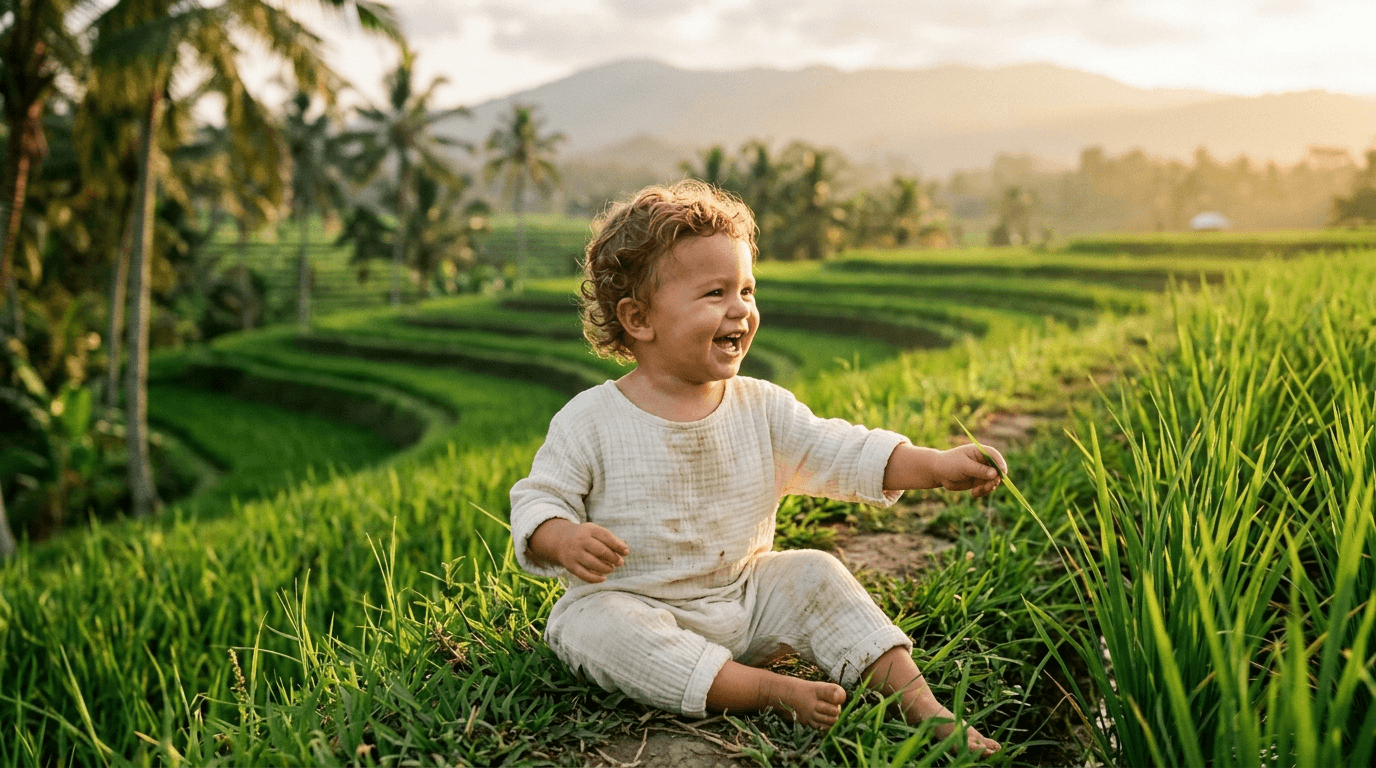
We didn't set out to start a clothing brand. We were two parents in Bali, sweating through afternoons with our daughter, trying to find something she could wear that didn't leave her flushed and irritable by 10am. Bali's climate holds a steady 27–32°C (81–90°F) with humidity around 80% for most of the year (BMKG, Indonesia's climatology agency), and that kind of heat doesn't forgive stiff fabric or tight seams. Most "baby basics" from big box stores looked fine on a hanger and fell apart within a season: seams fraying, fabric going thin and scratchy, colors dulling. The muslin swaddle a friend gave us at the hospital was still buttery-soft a year later, patched into a play blanket our daughter dragged everywhere. That contrast is what started Epic. If a simple swaddle could hold up like that, why couldn't everyday clothes?
Why Muslin Actually Gets Better With Time
Muslin is a loose, breathable cotton weave, often doubled or tripled in layers for clothing weight. That open structure — not a single dense layer — is the whole story behind why it holds up. Traditional muslin is woven with a notably low thread count, often somewhere between 60 and 180 threads per square inch depending on grade (Britannica), far looser than the tight weaves used in standard cotton tees. Tightly packed fibers are what make fabric feel scratchy when new and brittle when old. Muslin's looser weave has room to relax with washing, so each cycle softens it instead of breaking it down. We've watched this happen with our own daughter's rotation: the pieces she's worn the longest are the ones she reaches for first, not because we're precious about them, but because they've genuinely become the softest thing in her drawer.
The Real Math Behind "Worth It"
If you're comparing sticker prices, muslin loses every time to a $6 pack of tees. But cost-per-wear — what you actually pay divided by how many times a piece gets worn — tells a different story:
- A stiff synthetic-blend onesie often shows pilling or thinning within 15–20 washes, especially in humid, high-sweat climates
- Muslin holds its structure well past that point and softens instead of degrading
- Families like ours doing 3–4 washes a week (tropical living means more laundry, not less) feel this difference within a single month, not a year
The extra dollars aren't paying for a fancier label. They're paying for a weave that was engineered to loosen up, not lock down.
What Sensitive Skin Actually Notices
Our daughter has always run hot and reacted fast to anything scratchy or synthetic. What we noticed with muslin wasn't dramatic. It was the absence of drama: no red marks from tight elastic, no overheating meltdowns by midday, no constant tugging at collars or cuffs. Breathable, lightweight fabric doesn't announce itself. It just lets a kid forget what they're wearing, which is really the whole point.
Designed for Exploration
We didn't want clothes that survived being worn. We wanted clothes that disappeared into the background of an actual childhood: fabric light enough to move in, soft enough to nap in, and forgiving enough for the dirt, sand, and spilled mango juice that comes with a kid living outdoors. Freedom of movement matters more than we expected. Watching our daughter climb, crawl, and full-sprint across a beach without once tugging at a waistband or scratching at a seam told us we'd found the right fabric before we ever put "Epic" on a label.
What to Look For When Shopping
If you're choosing muslin pieces for your own family, here's our practical checklist:
- Multiple fabric layers. True muslin clothing, not just muslin-branded, uses a layered weave. That's what drives the softening effect.
- Loose, visible weave. Hold it up to light. You should see texture, not a flat, tight surface.
- Roomy cut through the arms and legs. Tight-cut "muslin" pieces defeat the purpose of breathable fabric.
- How it feels after one wash, not before. Ask for a return policy if you can't test this yourself. The first wash tells you a lot.
- Weight appropriate to season. Lighter layers for daily tropical wear, slightly heavier for cooler evenings or air-conditioned spaces.
FAQs
How do I care for muslin clothing so it lasts?
To make muslin clothing last, wash it in cool or lukewarm water, skip the fabric softener (it coats fibers and blocks the natural softening process), and line-dry when you can. Machine drying on low is fine occasionally, but air-drying preserves the weave longest. Expect the fabric to feel noticeably softer after the first few washes — that's the material working as intended, not wearing thin.
How should I size muslin clothing for travel or a growing baby?
Because muslin clothing softens and relaxes slightly with wear, we suggest sizing it true-to-age rather than sizing up "to grow into." Oversized muslin loses some of its close, breathable comfort and can bunch in a carrier or car seat. For travel, pack one size current and one size up if you're gone longer than two weeks. Muslin packs small either way.
Is muslin really better for sensitive or eczema-prone skin?
We can't make medical claims, but muslin's breathability and softness mean less trapped heat and less friction against skin, which is often what aggravates sensitive or eczema-prone skin in the first place. If your child reacts to stiff or synthetic fabric, muslin is worth trying as a lower-irritation alternative based on what we've observed as parents.
A Note from Bali
We started Epic because we were tired of buying the same "durable" outfit three times a year. What we found instead was a fabric that rewarded patience: it got better the more life it lived through. If you're somewhere hot, humid, and full of movement like we are, we think your kid deserves clothing that keeps up instead of wearing out. Come see what we've built for families like ours. It's on the shop, ready whenever you are.
More from Knowmads Bali
Born in Bali · Tested in the tropics
Muslin cotton, made for the heat
Breathable, soft, and built for real tropical days. Our onesies & playsuits are where most families start.